Monday, October 26, 2026

Judicial independence should not be shrouded in controversies of bias and partisan politics


By Moses Sserwanga


Government should be saluted for being steadfast in increasing the number  of judicial officers to meet the high demand for justice within the population .


However, as number of judicial officers increases at all levels -there has also been a marked rise in cases of conflicts between Magistrates / judges and Advocates- who are also (officers of court) –in the management and determination of cases.


In this two part series, about this intricate relationship between judicial officers (the bench) and Advocates (the bar)- its prudent to remind us about the legal responsibilities and professional conduct expected of either party in the dispensation of justice and upholding the rule of law in Uganda.


And we shall in this particular article deal with the case of judicial officers at all levels.


Chief Justice emeritus, Benjamin Odoki, in his book Judicial Conduct and Practice, has stated that the most important single quality required of a judge is that he must be a personal of unquestionable probity. For a judge or any other judicial officer a reputation for honesty is as important as honesty itself.

Therefore, the assumption of a judicial office casts upon the incumbent certain obligations in respect of his personal conduct which concern his relations with the State and its inhabitants; the litigants, the practitioners of law in his court, the witnesses and the officers and attendants who assist him in the administration of justice.


That’s why the old legal maxim (principle) that man shall not be a judge in his own cause is one of the heralded tenets of judicial conduct and practice.

This is because there cannot be a fair trial where the magistrate or judge has an interest in a case, which is due for his determination.


The spirit of these English legal principles are also captured by our constitution which expressly provides in Article 15(1) that a person accused of an offence must be afforded a fair hearing by an independent and impartial court.

These principles are very strictly applied and the smallest legal or pecuniary interest will disqualify a judicial officer (judge or magistrate) from adjudicating in matter or case before the court. If there is such an interest then it’s incumbent upon such a judicial officer to declare such interest and decline jurisdiction.

A judge should also disqualify himself if he has any substantial pecuniary relation with a party, even if that relation is not directly at issue in the case. This is the reason why courts of law have stated that where there is a real likelihood that a judge would, from kindred or any other cause have a bias in favour of one of the parties, it would be very wrong for him to act.


The other important matter which has to be known when issues of bias come afore is where the possible interest or bias is not pecuniary. At what stage should a judge or magistrate disqualify himself?

The courts have held that it is a question of degree that is, whether the position or relationship between a judge and party involved in the case is such that it gives rise to a reasonable suspicion of bias in reasonable minds.


Although its not possible say, for a magistrate to disqualify himself from trying all members of his clan, it would at the same time be very unwise of him/her to try a case involving a friend.

Justice Odoki has further stated that a judge or magistrate should not accept gifts and or favours from litigants and advocates appearing before him. He must discourage corruption and bribery as practices, which compromise the fair and proper administration of justice.


Of course, there are arguments that the paltry pay offered to judges, magistrates, and prosecutors is one of the factors that has led to the increasing cases of alleged corruption in the judiciary.

This imbalance in the salary structures, which are far below those offered in donor -funded jobs, for instance, needs the urgent attention of government.
However, this does not vacate the need for independence and impartiality of a magistrate or judge, which requires him to observe a strict code of conduct in private and public life.

He should not be swayed by partisan demands, public clamour or considerations of personal popularity or gain. And because of the high office they hold, judges are also expected to be choosy when they are out for social intercourse.

They (judges) are expected to avoid such relations or contacts which might be taken or tend to raise suspicion that their social or business relations or friends influence their judicial conduct or lower their image before the public.

And the sacred nature of judicial conduct could not have been captured any better than the words of Lord Devlin; “ there is another factor to be considered and that is the courts’ duty to conduct their proceedings so as to command the respect and confidence of the public.

The court of law is a temple of justice; and the advocate at the bar as well as the judge at the bench is equally a minister in the temple. The object of all equally should be the attainment of justice. So, how are errant judges or magistrates dealt with under our justice system?

The provisions of Article 144 of the constitution of Uganda come in handy. A judicial officer who are, the Chief Justice, deputy Chief Justice, the Principal judge, a justice of the supreme court, a justice of Appeal or a judge of the High Court can only be removed by the president if the question of his or her removal has been referred to a tribunal for either misbehavior or misconduct, incompetence or inability to perform duties due to infirmity of body or mind.

The removal however has to be in accordance with the provisions of articles 28 and 42 among others, which provide for a right to a fair hearing and a right to just and fair treatment in administrative decisions.

It should also be noted that other than removing errant judges and magistrates from office, the judiciary has instituted a couple of administrative measures to guard against professional misconduct and out right corruption.

According to the Chief Registrar of Courts of Judicature, in one of the interactions between members of the  bar and the bench has articulated that  one of such measures are the peer committees, which have been set up at all, levels in the judiciary to be on a look-out for the wrongdoers.


The Judicial Service Commission and the Office of the  Chief Registrar have also been equally empowered by various legal instruments to deal with errant judicial officers.

The writer is a journalist and advocate
msserwanga@gmail.com


Thursday, October 8, 2026

Batul Sabunwala An Indian National Together With Her Husband Have Been Arrested And Charged In Nakawa Court For Practicing Architecture Without Valid License and Illegal Construction


Batul Sabunwala, of Mystique Design studio, an Indian notoriously known in  Kampala for  illegal Architectural practice  and undertaking construction works from unsuspecting Ugandans while putting the lives of many at risk  has been  arrested  and  charged at Nakawa magistrates court .

Batul Sabunwala together with her husband Hakimudoin Sabunwala  were arraigned before the Senior Principal Magistrate ,Sabula Nambwozo and charged with the offences of conducting  building operations without  a building permit contrary to section 33 (1) and (2) of the Building  Control Act Cap 126  and deviations from approved plan, drawing -contrary to  Regulation 42 (1) (b) of the Building  Control Regulations  of 2020.

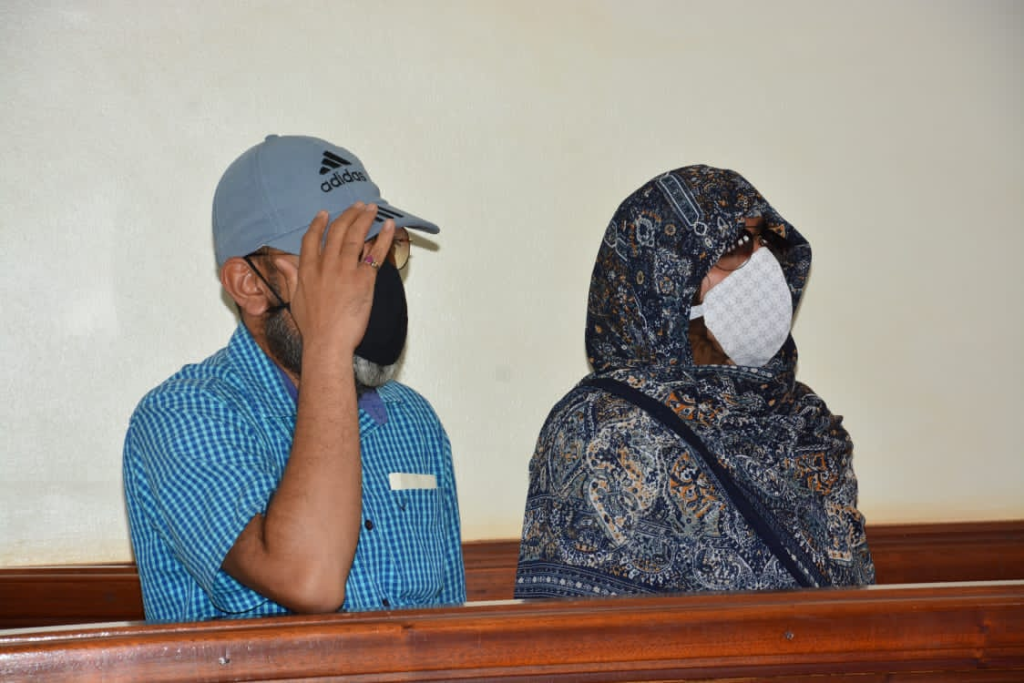
Batul Tinwala Sabunwala charged for practicing Architeture without a valid license

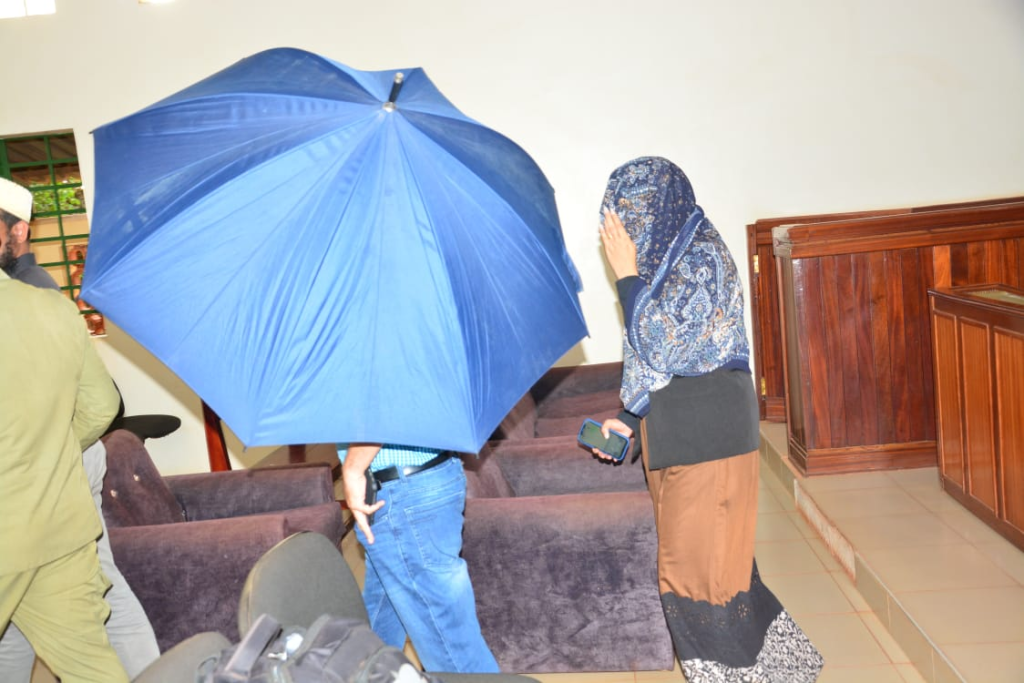
The two accused appeared in court while hiding under an umbella even when it was not raining and wore masks to hide their faces .

State Attorney , Mahatima Odongo who led the prosecution told court that Batul Sabunwala aged 36 and Hakimudoin Sabunwala aged  43 years , residents of Bukasa  Muyenga Makindye  Division  in Kampala District , between 2024 and  2025 at Naguru Nakawa Division without a valid  building permit , intentionally  constructed a storeyed  house at plot 63 Katalima road Naguru.

Batul Tinwala Sabunwala charged for practicing Architeture without a valid license

Prosecutor Odongo further told court that the two accused persons between the same period undertook construction works  under  their company  Mystique Developers Limited , willfully and unlawfully  deviated from the approved building plan without approval  of the Building  Committee as provided for in the law.

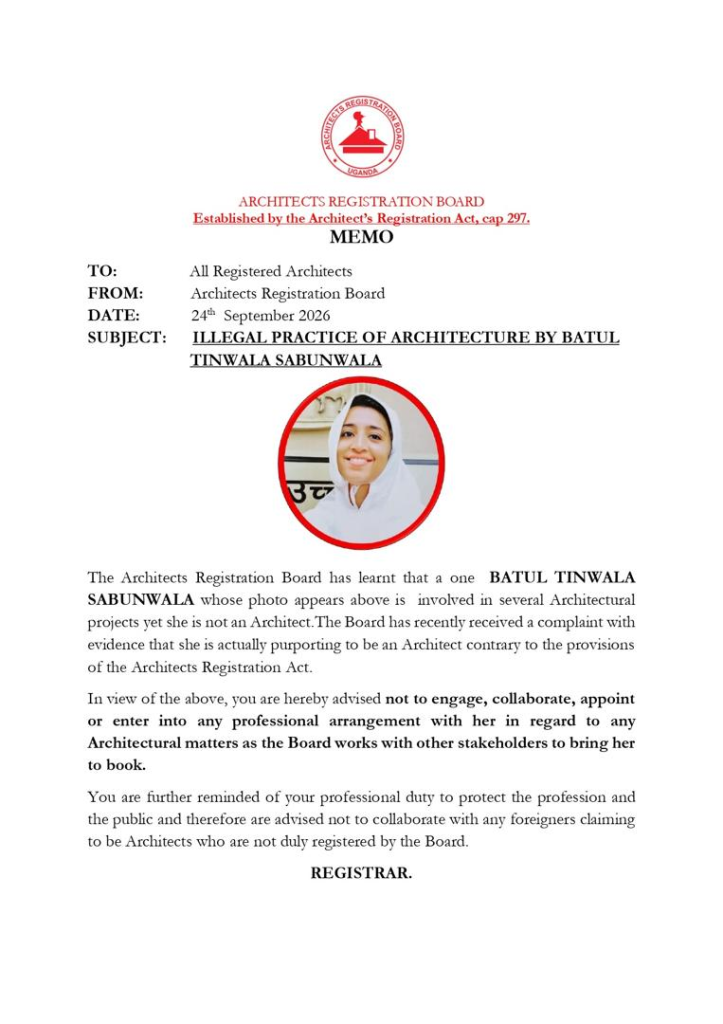
Although ,both the accused denied the charges while taking plea before the magistrate ,  Batul Sabungwala  was denied a  licence and rejected by the Architect Registration Board and Uganda Society of Architects due to technical incompetence, along with her husband Mr. Hakim Sabunwala.

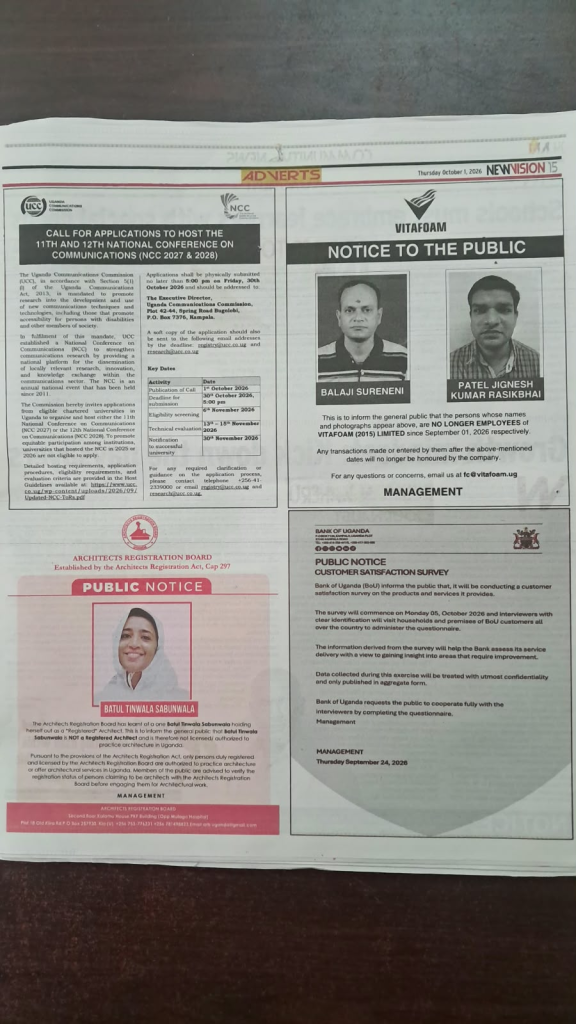
In a New Vision newspaper public notice , dated  October 1,  2026, the Architects Registration Board (ARB) stated that Batul Tinwala Sabunwala  was holding herself out as a ‘registered’ Architect and yet she was not licenced and authorized to practice architecture in Uganda.

The ARB furthure stated that pursuant to the provisions of the Architects Registration Act , only persons duly registered and licenced by the Architects Registration Board are authorized to practice architecture or offer architecture services in Uganda .

Hakimudoin Sabunwala charged for illegal construction

“Members of the public are advised to verify the registration status of persons claiming to be architects with the architects Registration Board before engaging them for Architectural work,” ARB stated in the public notice.

The arrest and subsequent charges brought against Batul Tinwala Sabunwala show the dangers posed by such illegal Architects and fake contractors which is a big  risk for buildings safety and if not taken seriously, Kampala would end up with more buildings collapsing , killing and injuring people.

Sources said Batul Sabunwala - a dependent foreign national has been taking money from unsuspecting general public claiming to be a licensed architecture and illegally giving construction jobs to her husband – a family member which is also illegal according to the Architecture law that bars architects from hiring their next of kin.

The ARB has since warned the general public to be on the lookout for such illegal, unlicensed architects and fake contractors and report them to the relevant authorities to save lives.

Editor;msserwanga@gmail.com